Toilet flush valve not sealing: what the tank is telling you
Learn what a leaking toilet flush valve can signal, what a tank dye check confirms, and when to request a licensed toilet repair pro in San Diego County.
Water silently leaves the toilet tank, then the tank refills by itself. You may also notice an inconsistent flush when the toilet flush valve doesn’t close cleanly. Those clues point toward the tank’s internal sealing area, but they don’t identify one failed part by themselves.
How a flush valve leak differs from a running fill valve
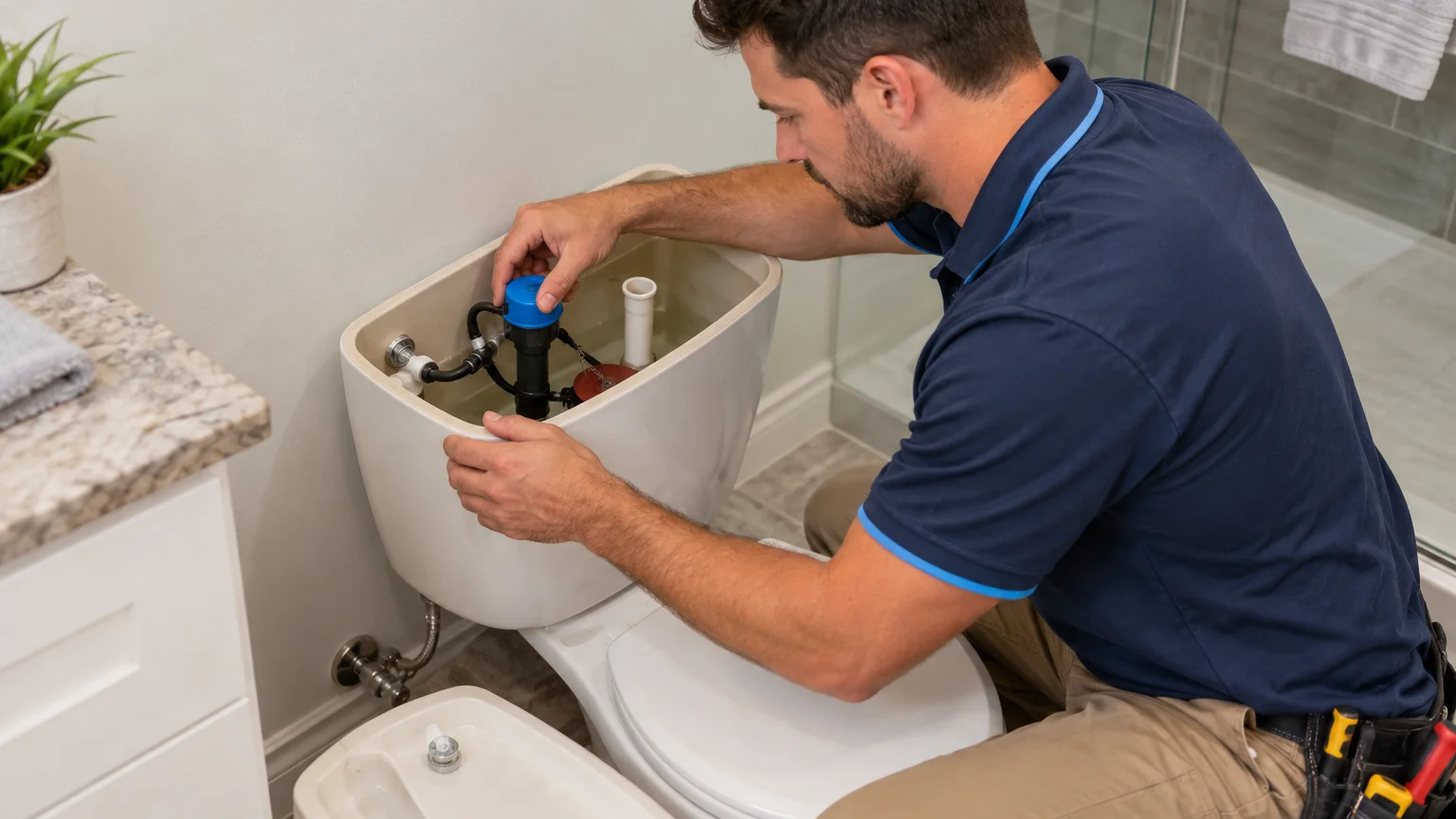
The toilet flush valve controls the opening between the tank and bowl. On many toilets, a flapper covers that opening until the handle starts a flush. Other toilets use a different moving seal, but the basic job remains similar.
When that opening doesn’t seal, tank water can pass into the bowl. The tank level drops, and the fill valve responds by adding more water. This cycle may sound like a brief refill between normal flushes. It can also remain quiet enough that you only notice movement in the bowl.
A fill valve problem begins on the incoming-water side. It may keep admitting water after the tank reaches its expected level. Water can then approach or enter the overflow tube. A flush valve leak can produce a similar running sound because the fill valve replaces escaping water.
That overlap makes sound alone a poor diagnosis. Look at where the water moves and what the tank level does. A plumber may also observe whether water continues entering after the flush components settle.
This problem is different from a broken handle or loose chain. Our guide to repairing a toilet flush handle covers cases where pressing the handle doesn’t lift the internal mechanism correctly. It’s also different from water appearing on the floor. Moisture around the toilet base calls for a separate inspection.
For a broader comparison of tank noises and refill cycles, see why a toilet keeps running. The symptom may sound similar, but the source can be different.
What dye in the tank can and cannot confirm
A dye check can help show whether colored tank water reaches the bowl without a flush. Add coloring to the tank water, leave the toilet undisturbed, and watch the bowl. Don’t flush during the observation.
Color appearing in the bowl suggests that water is crossing from the tank. That result narrows the problem to the tank-to-bowl pathway. It doesn’t prove that the flapper alone has failed.
The test can’t show whether the sealing surface is uneven. It can’t confirm that a chain is holding the seal slightly open. It also can’t tell you whether the flush valve body, overflow tube, or another connection is involved.
A negative result isn’t a complete mechanical inspection. An intermittent leak may not occur during the check. A part may shift only after certain flushes. The water level and internal mechanism also need to be considered.
Keep the test focused. It’s meant to reveal water movement, not identify a replacement part. Buying a flapper based only on tank color can miss a damaged seat or an incompatible assembly.
Write down what you observe before requesting service. Note whether color reaches the bowl, whether the tank refills without use, and whether the symptom follows every flush. Those details help the matched contractor begin with a clear symptom history.
Don’t confuse this test with checking for a floor leak. Dye reaching the bowl concerns water moving inside the toilet. Water beside the toilet, below the bathroom, or around the supply connection requires a different evaluation.
When the flapper, seat, or overflow tube is in play
A toilet flapper is one possible sealing part. It lifts during a flush, then returns over the flush valve opening. If it doesn’t settle evenly, water may continue moving into the bowl.
The flapper isn’t the only consideration. The seat is the surface where the movable seal rests. Debris, an uneven surface, or a mismatch between components may keep that contact from closing as intended. The chain may also affect how the flapper returns. Too much interference can prevent a clean landing.
Some toilets don’t use the familiar hinged flapper. Their flush valve assemblies may have a different seal and lifting mechanism. That’s why a photo or generic replacement package doesn’t always identify what belongs inside your tank.
The overflow tube is another part of the same area. Water entering the top of that tube points toward a water-level or fill-side concern. Water escaping through a damaged connection lower in the assembly presents a different repair question. An inspection can separate those paths.
Don’t assume a weak flush proves that the flush valve is leaking. Bowl restrictions, tank water level, and the movement of the flush mechanism may also affect the result. The symptom needs context.
San Diego’s Public Utilities Department reports average drinking-water hardness of about 16 grains per gallon, or 276 parts per million. The level can vary by location and demand. That local fact doesn’t diagnose a toilet part, but visible deposits are worth showing the contractor instead of scraping or altering them before the inspection.
For repairs involving several bathroom fixtures, our bathroom and kitchen plumbing referrals cover a wider service request.
What the contractor you’re matched with may inspect
The contractor may begin by flushing the toilet and watching the entire tank cycle. That shows how the handle, chain, moving seal, flush valve, fill valve, and water level interact.
They may check whether the seal returns squarely over its seat. They may also look for interference from the chain or another tank component. If the toilet uses a tower-style or canister assembly, the relevant seal may sit elsewhere than a standard flapper.
The inspection may include the flush valve seat and overflow tube. The contractor can look for visible wear, movement, deposits, or damage. They may compare the installed parts with the toilet’s actual configuration before recommending a repair.
A careful inspection should also separate internal water loss from an external leak. Water between the tank and bowl, around mounting hardware, at the supply connection, or on the floor doesn’t automatically come from the flush valve seal. Tell the contractor exactly where you’ve seen moisture.
Don’t clean away every clue before the visit. A dry towel can help reveal fresh moisture, but photos of prior water patterns may also be useful. Share any dye-check result and describe when the refill noise occurs.
The licensed contractor you hire determines the repair scope and price. Plumbing Pro San Diego doesn’t perform the work or set contractor pricing. We connect customers with independent plumbers in our network.
Every plumber in the network is licensed and insured. You can also check a contractor through the California Contractors State License Board before hiring. For homeowners near Interstate 8 and East County, our La Mesa plumber guide explains how local referral requests work.
How to request a toilet repair referral
Start with the symptom, not a guessed part number. Say that the toilet flush valve may not be sealing, then describe what the tank does. Mention silent water movement, unexpected refilling, bowl movement, or an inconsistent flush.
Include the toilet’s location within San Diego County. Access and scheduling are handled directly with the independent contractor. Plumbing Pro San Diego serves every city in the county, from coastal North County through central San Diego, East County, and the South Bay.
Share any observations you already have. Useful details include whether dye reached the bowl, whether the water level approaches the overflow tube, and whether touching the handle changes the noise. Mention visible water outside the toilet immediately because that may point to another leak path.
Photos can help document the tank’s current arrangement. Take a clear image with the tank lid removed, but don’t dismantle components for the photo. If you know the toilet’s manufacturer or model information, provide it without guessing.
A request for toilet repair service can cover diagnosis of the flapper, seal, flush valve, fill valve, and related tank components. The plumber you hire will decide what requires adjustment or replacement after inspecting the toilet.
Ask the contractor to explain the failed connection and proposed scope. Pricing can vary with the toilet, installed parts, access, and what the inspection reveals. No verified local standard price for this repair could be confirmed from the approved public sources, so request the contractor’s terms before authorizing work.
When to call us
Call when the tank loses water between flushes, repeatedly refills, or has a seal problem you can’t identify. A licensed plumber should inspect unclear internal leaks and any moisture appearing outside the tank. Call us at (858) 400-4417 and we’ll connect you with a licensed plumber.
Areas this guide covers
We connect homeowners with licensed plumbers in these San Diego County communities.
Keep reading
Need a Plumber in San Diego?
Licensed, insured plumbers, ready across San Diego County. The plumber quotes you before any work starts.
Call (858) 400-4417Call any time, day or night, anywhere in San Diego County