Toilet fill valve not shutting off: what to check
A toilet fill valve that won't shut off may hiss, overfill the tank, or run into the overflow tube. Learn what to check and when to call a plumber in San Diego.
The tank fills after a flush, but the water never stops. You may hear a steady hiss or see water entering the overflow tube. Those signs put the toilet fill valve near the top of the inspection list.
How a fill valve problem differs from a flush valve leak
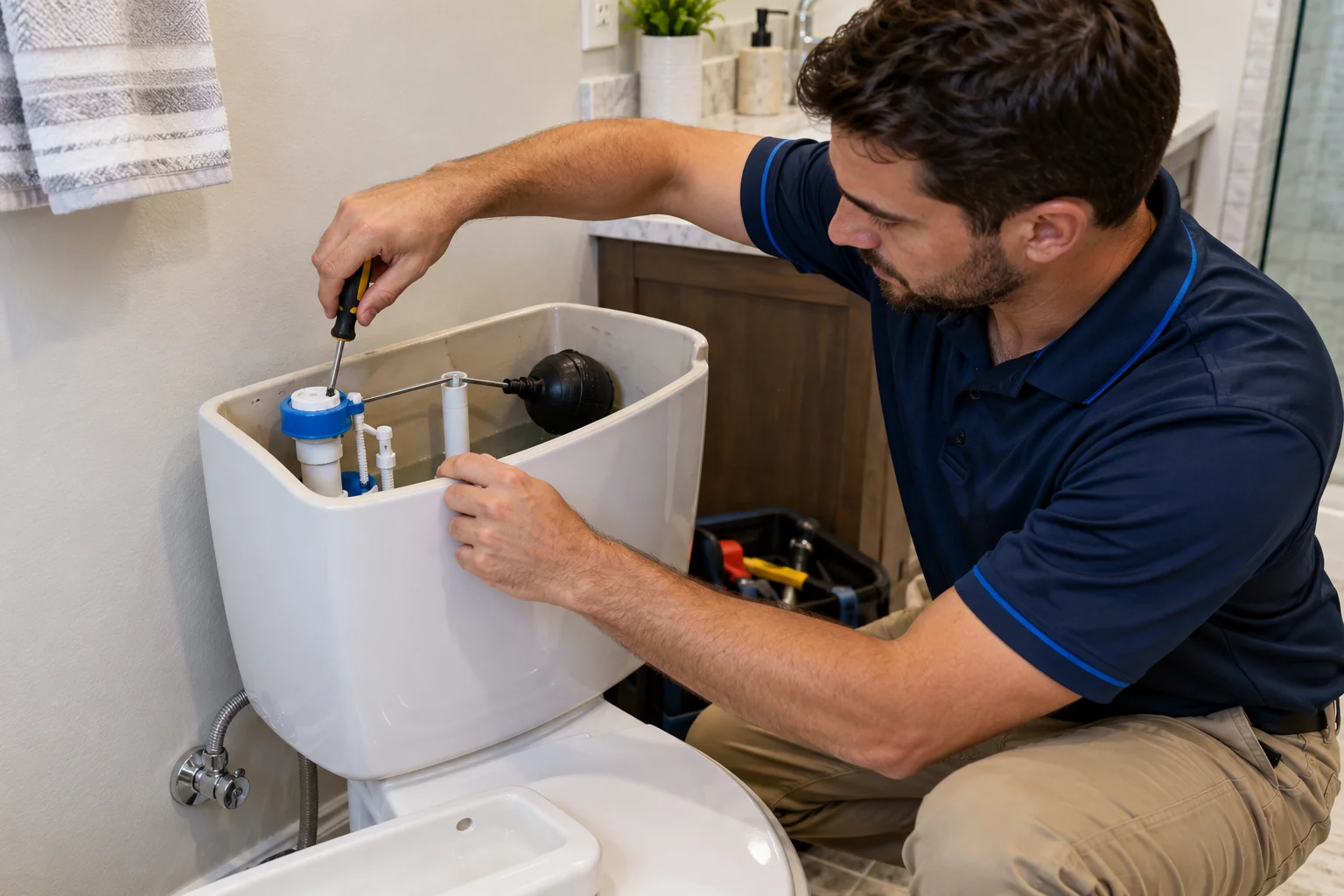
The fill valve controls water entering the toilet tank. It opens during the refill cycle and should close when the tank reaches its set level. A float moves with the water level and signals the valve to stop.
The flush valve handles a different part of the cycle. It controls the tank-to-bowl opening during a flush. A poor seal there can let tank water escape into the bowl. The fill valve may then open again because the tank level dropped.
Watch what happens inside the tank after one flush. Water flowing over the top of the overflow tube points toward a water-level or shutoff problem. A tank level that falls without another flush points toward a separate tank-to-bowl leak. Those observations help narrow the inspection, but they don’t confirm which part needs repair.
The sound can also provide context. A fill valve that keeps hissing while the tank remains full may not be closing correctly. A valve that starts again after a quiet interval may be responding to water leaving the tank elsewhere.
Our guide to a toilet that keeps running covers the broader problem. This page stays focused on the refill side of the tank. A contractor can inspect both systems when the symptom isn’t clear.
The flush handle is another separate assembly. If the handle sticks, feels loose, or doesn’t lift the internal mechanism, see our guide to toilet flush handle repair.
What a tank that will not stop filling can point to
A toilet fill valve not shutting off doesn’t identify one certain failure. The float may not reach its stopping position. The valve may no longer respond when the float rises. Water may also be leaving through the overflow tube as quickly as it enters.
Start with observation, not a parts purchase. Remove the tank lid carefully and set it on a stable surface. Then note what the water does after a normal flush. Don’t force a component or turn an adjustment you can’t identify.
Useful details include:
- Whether the float rises with the tank water
- Whether water reaches the overflow tube
- Whether the hissing stops at any point
- Whether the tank level stays steady afterward
- Whether water appears outside the tank
- Whether the supply connection looks wet
The pattern matters more than one symptom. Constant water entering the overflow tube differs from a tank that fills, stops, and later starts again. A slow refill also differs from a valve that never closes. Share the exact sequence when requesting a referral.
San Diego’s water conditions add useful local context. The City of San Diego reports average drinking-water hardness of about 16 grains per gallon, or 276 parts per million. It also says hardness varies by location and demand. The city attributes that hardness mainly to dissolved limestone in imported Colorado River water.
That information doesn’t prove mineral buildup caused your fill-valve problem. Homes outside the City of San Diego may also receive water from different agencies or sources. Your contractor can inspect the actual valve instead of assuming water hardness is responsible.
When the float, overflow tube, or supply is in play
The float, overflow tube, and supply each provide different clues. They also interact, so changing one part without identifying the cause can leave the toilet running.
The float is the moving control associated with the tank level. If it can’t move through its normal path, the valve may continue filling. Its exact adjustment depends on the installed design. Follow the toilet or valve manufacturer’s instructions before changing that setting.
The overflow tube is the open tube inside the tank. Water entering its top shows that the tank level has reached that opening. It doesn’t establish why the level rose. The float setting, fill valve, or another tank condition may still need inspection.
The refill tube is smaller and directs water toward the overflow tube during the normal refill cycle. Its placement can matter. A contractor can check whether it’s positioned according to the installed fixture’s instructions.
The supply side begins below the tank, where the toilet connects to the building’s water line. Moisture at the connection is a different concern from water running inside the bowl. Tell the referral service if you see water on the floor, cabinet, wall, or supply line. That detail helps describe the scope accurately.
Don’t assume every running sound means the fill valve itself has failed. A tank-to-bowl leak can cause the fill valve to react repeatedly. A damaged handle mechanism can also keep the flush cycle from returning to its resting position.
For broader fixture work, see our bathroom and kitchen plumbing referrals. For a problem centered on this fixture, the toilet repair service is the closer match.
What the contractor you’re matched with may inspect
The independent contractor you hire may begin by observing a complete flush and refill cycle. That shows when the fill valve opens, how the float moves, and whether the water stops below the overflow opening.
The inspection may cover:
- The fill valve and its shutoff response
- Float movement and adjustment
- Water entering the overflow tube
- Refill-tube position
- The flush valve and tank-to-bowl seal
- The handle, chain, or connected mechanism
- The tank water level after filling
- Supply-line and tank connections
- Moisture around the toilet and nearby flooring
This sequence separates the symptom from the source. Replacing a fill valve won’t address a separate flush-valve leak. Adjusting a float also won’t correct a valve that can’t close reliably. The contractor can explain what was observed before you authorize work.
Individual contractor capabilities vary. California’s C-36 classification covers plumbing work involving safe water supply, fluid-waste disposal, piping, regulating valves, and repairs within that scope. You can check an individual contractor through the CSLB license lookup. The database lists license status, classifications, bond information, and workers’ compensation information.
The pros in our referral network are licensed and insured. Plumbing Pro San Diego doesn’t perform the inspection, set the repair price, or collect payment for the contractor’s work. You’ll contract with and pay the matched plumber directly.
Local access can shape the visit. A toilet in a compact La Mesa bathroom may offer less working room than one in a larger detached home. If you’re nearby, our La Mesa plumber guide explains the wider referral coverage for that area.
How to request a toilet repair referral
Describe the behavior in the order it happens. “The toilet runs” is a starting point, but a few direct observations make the request clearer.
Tell us whether the tank keeps filling immediately after a flush. Mention a steady hiss, water entering the overflow tube, or a float that doesn’t appear to rise. Also say whether the toilet stops and restarts later. If water appears outside the tank, state exactly where you see it.
Include the toilet’s brand or model only if you can read it without guessing. A photo of the open tank may help the matched contractor recognize the installed layout. Don’t claim a part has failed unless someone has confirmed it.
It also helps to explain any recent change. Note whether someone adjusted a tank component, replaced a handle, or worked on the supply connection. That context can guide the inspection without deciding the repair in advance.
We connect customers across San Diego County with independent plumbing contractors. Coastal communities, inland neighborhoods, East County, central San Diego, and the South Bay don’t all share the same water provider or property conditions. Give the exact service address when making the request so the referral matches the correct area.
No verified standard price for fill-valve inspection or replacement appears in the approved local claims. Contractors set their own prices based on the fixture, access, parts, and actual scope. Ask the matched contractor for the proposed work and total price before authorizing the repair.
When to call us
Call when the toilet fill valve keeps hissing, water continues entering the overflow tube, or the source of repeated refilling remains unclear. A licensed plumber can inspect the fill valve, float, flush valve, and supply connections before recommending repair.
Call us at (858) 400-4417 and we’ll connect you with a licensed plumber.
Areas this guide covers
We connect homeowners with licensed plumbers in these San Diego County communities.
Keep reading
Need a Plumber in San Diego?
Licensed, insured plumbers, ready across San Diego County. The plumber quotes you before any work starts.
Call (858) 400-4417Call any time, day or night, anywhere in San Diego County