
Last updated: April 20, 2026
12 Signs You Need to Call a Professional Plumber (Not DIY)
A $75-$150 service call beats a $5K DIY mistake. 12 signs the job is beyond YouTube fixes: slab leaks, gas lines, main-line clogs, and more in San Diego.
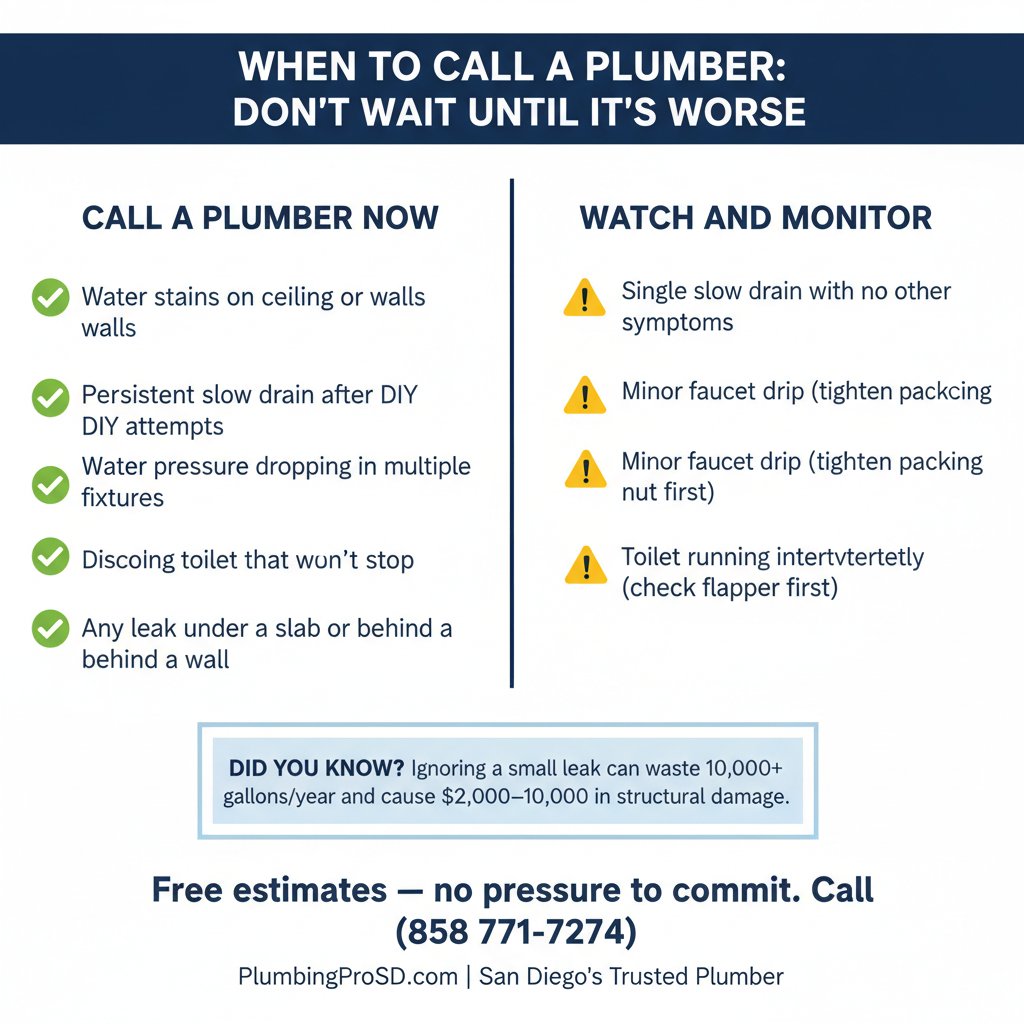
The short answer
- Call a licensed plumber when the job carries real risk: slab leaks, gas-line work, main-line clogs, multiple slow drains at once, or anything involving cutting pipe.
- A San Diego service call runs $75 to $150, far cheaper than a botched DIY repair that turns into thousands in water damage or mold.
- Showerheads, toilet flappers, and simple plunger clogs are fine DIY; opening walls, cutting pipes, or gas connections are not.
- San Diego hard water (about 16 grains per gallon) speeds up pipe and water heater failure, so small issues worsen if delayed.
- Homes built before 1985 should get a pre-purchase plumbing inspection. Call (858) 400-4417 if you are unsure.
Some plumbing problems are genuinely DIY-friendly. Swapping a showerhead, replacing a toilet flapper, clearing a simple clog with a plunger, these are reasonable weekend projects for a homeowner with basic tools and patience. YouTube can walk you through them, and the stakes are low.
Then there’s another category: problems that look manageable on the surface but carry serious risks if you get them wrong. Pipe work that involves gas. Leaks that turn out to be slab leaks. Drains that back up because of a main-line problem, not a local clog. When you attempt these yourself, the cost of a mistake is measured in water damage, mold remediation, or structural repair, not just a re-do.
These 12 signs tell you it’s time to put down the wrench and call a licensed plumber.
Why does knowing the DIY line matter?
The plumbing repair that most homeowners regret attempting is the one where the problem turned out to be bigger than it looked. A “slow drain” that’s actually a main-line blockage. A “dripping pipe” that’s a pinhole slab leak. A “simple water heater fix” that involves gas connections they weren’t comfortable with but did anyway.
The cost of calling a plumber unnecessarily is a service call fee, typically $75–$150 in San Diego. The cost of making the wrong call on a complex problem can run into thousands. Understanding which signs indicate a problem beyond DIY scope is one of the highest-value things a homeowner can know.
12 Signs You Need a Professional Plumber
1. Multiple Drains Are Slow or Backed Up at Once
A single slow drain almost always means a localized clog, hair, soap scum, grease, that a plunger or drain snake can clear. When multiple drains in different parts of the house are slow or backing up simultaneously, kitchen sink and bathroom drain, or bathtub and toilet, the pattern points to the main sewer line.
Main-line problems require a camera inspection to diagnose correctly. The cause could be grease buildup, root intrusion, a belly in the pipe, or a partial collapse, each with a completely different solution. Snaking without knowing the cause is often ineffective and occasionally makes things worse by damaging a compromised pipe. Call a plumber who can camera the line before treating it.
In San Diego, tree root intrusion is particularly common in neighborhoods with mature trees and older clay or Orangeburg sewer laterals, Hillcrest, North Park, University Heights, Kensington, and similar areas. If you live in one of these neighborhoods and have recurring drain slowness, it’s worth getting a sewer camera inspection done proactively.
2. Your Water Bill Has Increased Without Explanation
If your water bill has jumped $30, $50, or more without any change in usage habits, and has stayed elevated for two or more billing cycles, you almost certainly have a hidden leak. San Diego Water Authority bills are typically bi-monthly, which means a leak can run for 60 days before you see it in the bill.
The water has to go somewhere. If you can’t see it, it’s likely inside a wall, under the slab, or in the yard. A plumber with leak detection equipment can find it using acoustic sensors, thermal imaging, or pressure testing. Don’t ignore an unexplained bill increase, a hidden water leak that goes undetected for months causes far more damage than the repair would have cost.
You can run a quick self-test: shut everything off in the house, locate your water meter (in a box at the curb), and watch the leak indicator, a small triangle or dial on the meter face. If it’s spinning with everything off, you have an active leak. Call a plumber.
3. You Notice Warm or Wet Spots on Your Floor
A patch of floor that feels warm or slightly wet without a visible source is a classic slab leak sign. San Diego homes are predominantly slab-on-grade construction, meaning water supply lines run directly through or under the concrete foundation. When a copper line corrodes through, accelerated by San Diego’s hard, mineral-heavy water, the leak occurs under the concrete.
This is not a DIY problem under any circumstances. Slab leak repair requires electronic detection equipment to locate the failure point, and repair options (spot excavation, pipe rerouting, epoxy lining) have different implications for your home’s structure and plumbing system. Attempting to find a slab leak by guessing where to jackhammer is expensive and almost never works.
If you spot this sign, see also our guide on low water pressure in San Diego, slab leaks frequently cause pressure drops at specific fixtures.
4. Water Pressure Has Dropped Throughout the House
Reduced pressure at a single fixture is usually a clogged aerator or failing fixture, clean or replace the aerator (the small screen at the faucet tip) and see if that fixes it.
When pressure drops throughout the entire house, every shower, every faucet, every hose bib, the cause is upstream of individual fixtures. Possible causes include:
- A failing pressure regulator (PRV), most San Diego homes have one where the main line enters; when it fails, pressure either drops dramatically or swings unpredictably
- A significant leak on the supply side that’s losing volume before it reaches your fixtures
- Buildup in older galvanized pipes that are narrowing from the inside
- A problem with your utility’s supply line
A plumber can test your PRV, measure actual supply pressure, and diagnose whether the issue is in your system or at the street.
5. You Hear Banging, Hammering, or Gurgling in Your Pipes
Banging or hammering when you shut off a faucet is water hammer, pressure waves traveling through the supply line. Mild water hammer is a nuisance; severe hammer can damage pipe joints and fittings over time. The fix is usually a water hammer arrestor, but a plumber should evaluate whether your pressure regulator or supply pressure is contributing to the problem.
Gurgling from a drain after using a different fixture, the toilet gurgles when you run the washing machine, indicates a venting problem. Plumbing drains require air vents to equalize pressure; a blocked or improperly configured vent causes drains to siphon water from traps and allows sewer gas into the home. This is not a DIY fix and gets worse if ignored.
6. Your Water Heater Is More Than 10 Years Old and Acting Up
The average tank water heater lasts 8–12 years in most climates. In San Diego, where water hardness runs about 16 grains per gallon, scale buildup inside tank heaters shortens that lifespan. A water heater over 10 years old that’s showing symptoms, rumbling sounds (sediment), inconsistent heating, rusty water, or pooling at the base, is telling you it’s close to the end.
A plumber can assess whether a repair extends the life meaningfully or whether replacement is the better investment. This is also the natural decision point to consider whether a tankless water heater makes sense for your household. Tankless units last 20+ years with proper maintenance and are well-suited to San Diego’s demand for consistent hot water. Water heater replacement requires permits in San Diego, not a DIY project.
7. There’s a Sewage Smell in the House
A sewer gas smell, a rotten egg or sulfur odor, inside the home is not a minor issue. It means sewer gas (which includes hydrogen sulfide and methane) is entering your living space. Possible causes:
- A dry P-trap (the U-shaped pipe under sinks that holds water to block gas), easily fixed by running the fixture
- A cracked or deteriorated wax ring under a toilet
- A blocked or damaged vent pipe
- A cracked drain line in the wall or under the slab
The first cause, a dry trap in a rarely-used fixture, is DIY (just run the water). The others require a plumber. If the smell is pervasive throughout the house rather than localized to one fixture, assume it’s a drain or vent line issue and call.
8. You Have Discolored or Rust-Colored Hot Water
Rusty brown or reddish hot water (with clear cold water) points to corrosion inside your water heater tank, the sacrificial anode rod has been depleted and the tank itself is beginning to rust. Anode rod replacement can extend tank life, but once the tank is corroding, replacement is the only real fix.
If both hot and cold water are discolored, the issue is in your supply pipes, likely older galvanized steel pipes corroding from the inside. This is a bigger situation that a plumber needs to evaluate, as the solution may involve repiping sections of the home.
9. You’re Doing Any Bathroom or Kitchen Renovation
Any renovation that touches plumbing, adding a bathroom, reconfiguring a kitchen, moving a fixture, requires permit work in San Diego and needs a licensed contractor. This isn’t just bureaucracy: it ensures the work meets code, passes inspection, and is documented for future buyers. Unpermitted plumbing work discovered at sale can require expensive retroactive permitting or removal.
Even if the renovation itself seems simple, a plumber should review whether your existing supply lines and drain configuration can support what you’re planning. San Diego’s older housing stock frequently has galvanized pipes that need upgrade when touched.
10. Any Work Involving Gas Lines
This is a firm line, not a gray area. In California, gas line work must be performed by a licensed contractor. The risk profile of improperly connected gas lines, fire, explosion, carbon monoxide, makes this non-negotiable. If you’re connecting a new gas appliance, extending a gas line, or repairing a gas connection, call a licensed plumber.
If you smell gas at any point, evacuate immediately and call SDG&E (1-800-411-7343) before calling a plumber. Per SDG&E safety guidelines, do not use any electrical devices or open flames inside the home before it has been cleared. Gas connections to furnaces and other heating equipment fall under a different trade license, so a gas issue on the heating side needs a licensed HVAC contractor rather than a plumber.
11. A Leak Has Reappeared After You Repaired It
If you’ve addressed a leak yourself and it’s back within weeks or months, one of two things is true: the repair wasn’t sufficient, or the underlying cause, corrosion, high pressure, movement, hasn’t been addressed and is attacking the same location again. Repeated repairs in the same spot tell a plumber that the surrounding pipe is compromised.
A plumber can assess whether you’re dealing with an isolated failure or a pattern of pipe deterioration that warrants a broader repair strategy. In San Diego’s older homes with original copper piping, recurring pinhole leaks often signal that a repipe is more economical than continued spot repairs.
12. Your Main Shutoff Valve Is Stuck or Failing
Many homeowners discover their main shutoff valve doesn’t work only when they need it desperately, during a burst pipe or appliance leak. If you test your main shutoff and it won’t close fully or moves with extreme difficulty, have it replaced before you need it.
Replacing the main shutoff requires turning off water at the street meter and involves soldering or fitting work on the main supply line. A failed installation means your water is running freely through the home. This is a plumber job.
What can you safely handle yourself?
To be clear, plenty of plumbing maintenance is appropriate for capable homeowners:
- Replacing a faucet or showerhead, with the supply valve off under the sink, this is generally low-risk
- Swapping a toilet flapper or fill valve, a $10–$20 part and 20 minutes
- Clearing a simple, single-fixture clog with a plunger or hand-cranked snake
- Replacing a toilet’s supply line (the braided hose from valve to tank)
- Cleaning faucet aerators, unscrew the tip, rinse the screen, replace
- Replacing a showerhead, just unscrew and hand-tighten the new one
The practical rule: if it involves cutting pipe, working with gas, requires a permit, affects more than one fixture at a time, or involves anything below a concrete slab, call a plumber.
How does San Diego’s hard water accelerate plumbing problems?
San Diego gets most of its water from the Colorado River via the State Water Project. By the time it reaches your tap, it carries about 16 grains per gallon of dissolved minerals, calcium and magnesium primarily. The San Diego County Water Authority reports water hardness levels that put San Diego firmly in the “hard” to “very hard” range by national standards.
This matters for plumbing because:
- Copper pipes corrode faster, minerals and oxygen in hard water accelerate pinhole corrosion from the inside
- Water heaters scale faster, the sediment problem that affects all tank heaters is more severe and more rapid in San Diego
- Fixture aerators and showerheads clog faster, the white crusty mineral deposits (calcium carbonate) that build up on fixtures happen in weeks rather than months
- Tankless heaters need annual descaling, the heat exchangers in tankless units are particularly vulnerable to scale in San Diego’s water conditions
If you’re replacing plumbing components and don’t address water quality, you’ll replace them again sooner than you should. Ask a plumber about water softening or filtration options, the EPA WaterSense program also has resources on water-efficient fixtures that perform better in hard water conditions.
How do you choose the right plumber in San Diego?
When you’ve identified that you need a professional, how do you pick the right one? Our full guide on how to choose a plumber in San Diego goes deeper, but here are the basics.
Verify the license first. California requires plumbing contractors to hold a C-36 license from the CSLB. Look up any plumber you’re considering at the CSLB license verification site before calling them. It shows current status, workers’ comp coverage, and any disciplinary history.
Get written estimates. For any job over $150, California law requires a written contract before work begins. A plumber who won’t provide one is a red flag.
Ask about permit requirements. If you need a permit for the work (water heater, sewer line, repipe, gas work), confirm the plumber will pull it and coordinate inspection. Any contractor who suggests “we can skip the permit” on permitted work is putting you at risk.
Check reviews specifically for the type of work you need. A company with great drain cleaning reviews may not be who you want for a slab leak. Look for reviews that match your situation.
Frequently Asked Questions
Q: How do I know if my plumbing problem is worth a service call?
If you’ve tried the obvious DIY fix (plunger for a drain, resetting the GFCI for an electrical issue, cleaning an aerator for low pressure) and the problem persists, it’s time to call. The service call fee, typically $75–$150 in San Diego, is far less than the cost of letting a problem go. When in doubt, a quick phone call to a plumber costs nothing and they’ll tell you whether it warrants a visit.
Q: Can I save money by diagnosing the problem myself before calling?
To a point. Running the water meter test to confirm you have a leak, checking your circuit breaker before calling about an electric water heater, or running water in a rarely-used drain to see if a smell clears, these are all sensible steps. But resist the urge to open walls, cut pipes, or attempt complex diagnostics beyond your experience level. Mistakes here can make the ultimate repair more expensive, not less.
Q: Why does delaying plumbing repairs cost more in the long run?
Water damage is cumulative. A slow leak that goes unchecked for months causes mold, wood rot, and drywall damage that collectively cost far more to remediate than the original plumbing repair. A main-line sewer issue that’s ignored until backup occurs causes sewage exposure that may require professional cleaning. San Diego’s hard water also means that problems caused by mineral buildup, sediment in water heaters, scale in tankless units, worsen progressively if not addressed.
Q: What’s a reasonable price for a plumber in San Diego?
Service call fees in San Diego typically run $75–$150 for standard appointments. Common repairs range from $150–$400 for minor issues (faucet repair, toilet rebuild, simple leak) to $800–$3,000+ for significant work (slab leak repair, sewer line work, water heater replacement). Get a written estimate before authorizing any work. See our comprehensive guide on plumbing costs in San Diego for detailed pricing by job type.
Q: Is it worth getting a plumbing inspection if I’m buying a home in San Diego?
Absolutely, especially for homes built before 1985. A pre-purchase plumbing inspection includes a sewer camera inspection (to check the lateral for root intrusion, deterioration, or bellies), assessment of the pipe material and condition (copper with pinholes vs. newer PEX), water heater age and condition, and water pressure testing. In San Diego’s older housing stock, discovering a needed repipe or sewer replacement before closing is far better than after.
Related reading
Once you’ve decided to call a pro, the next question is cost. Our San Diego plumbing pricing guide breaks down what you should expect to pay for every common job. If the situation feels urgent, our guide to emergency plumbing in San Diego covers what qualifies as a true emergency, expected response times, and after-hours pricing.
Plumbing Pro San Diego serves all of San Diego County, from Oceanside and Carlsbad in the north to Chula Vista and National City in the south, and from coastal Pacific Beach and La Jolla east to El Cajon and Santee. Homeowners in Fallbrook, Valley Center, and Alpine are covered too. If you’re seeing any of these signs, call (858) 400-4417 for a no-pressure assessment. We’ll tell you honestly what you’re dealing with and what your options are. Visit our professional plumbing services to learn more.
Areas this guide covers
We connect homeowners with licensed plumbers in these San Diego County communities.
Keep reading
Need a Plumber in San Diego?
Licensed, insured plumbers, ready across San Diego County. The plumber quotes you before any work starts.
Call (858) 400-4417Call any time, day or night, anywhere in San Diego County