Sewer cleanout installation: when a home may need one
Learn when missing or difficult sewer cleanout access may justify installation, what affects placement, and what San Diego homeowners should confirm first.
A contractor says your sewer line has no usable access point. That doesn’t automatically mean you need a new one. It means the existing layout needs to be confirmed before anyone recommends sewer cleanout installation.
What a sewer cleanout gives a contractor access to
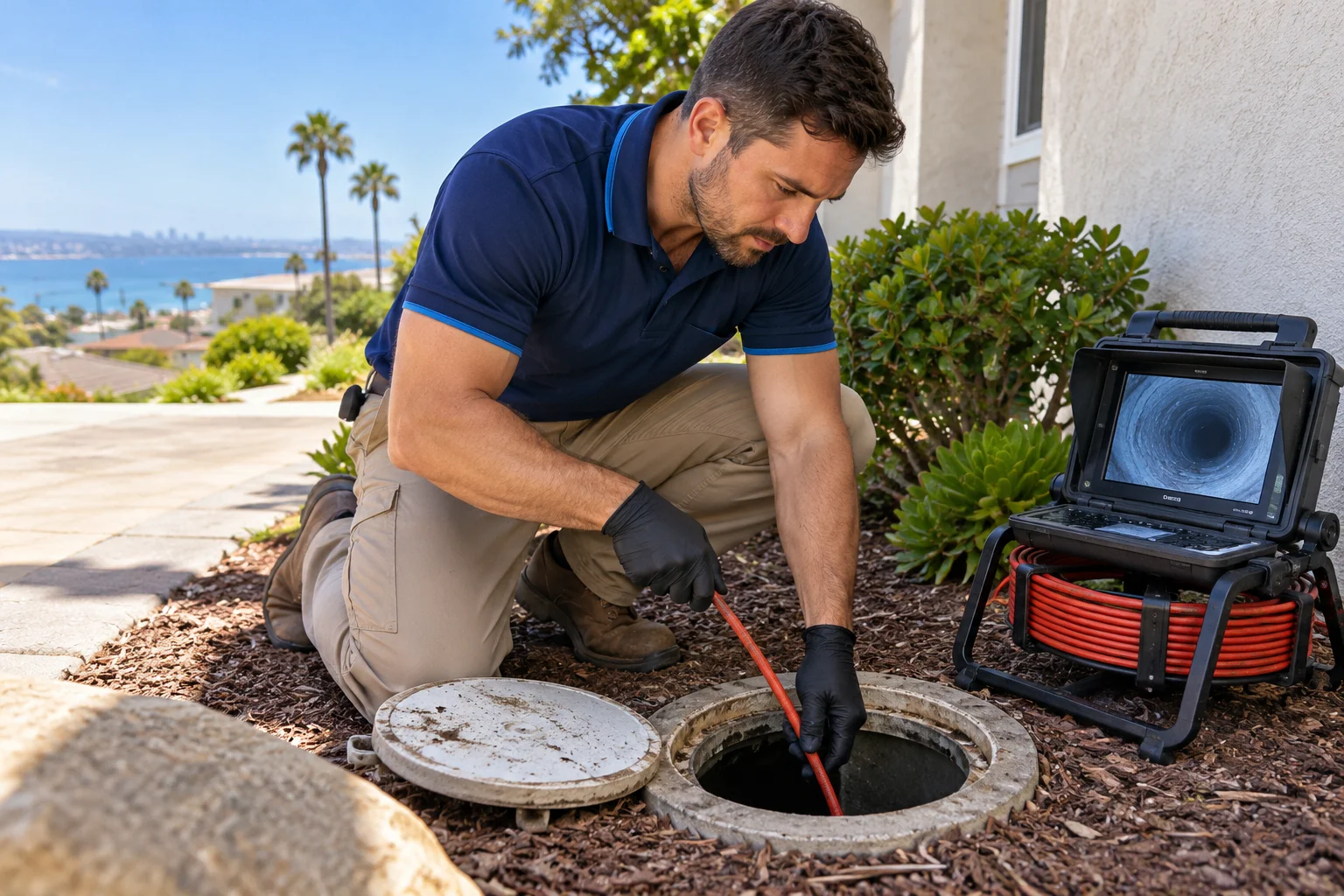
A sewer cleanout is an access point connected to a drain or sewer line. A contractor can use that opening to reach the line with suitable equipment. The exact equipment and approach depend on the problem and the property’s piping layout.
That access matters when a blockage or suspected defect sits beyond a fixture. Without a suitable opening, the contractor must identify another route. They may need to work through an existing plumbing connection or propose adding access. The contractor should explain why the available route isn’t suitable before recommending installation.
Cleanouts aren’t all arranged the same way. You may hear terms such as one-way or two-way cleanout. Don’t rely on the label alone. Ask the contractor to show which direction their equipment can travel from the proposed opening. That explanation is more useful than the name.
Access may also support a sewer camera inspection. However, adding a cleanout and diagnosing the sewer line are separate decisions. A camera guide can help explain what the inspection may address, but it shouldn’t replace a property-specific assessment. Our San Diego sewer camera guide covers that process in more detail.
The goal isn’t to add an opening simply because one can’t be seen. First, the contractor should check whether an existing access point is hidden, buried, damaged, or unsuitable. If no practical access exists, the contractor can explain whether adding sewer cleanout access fits the planned sewer-line service.
How missing access differs from an overflowing cleanout
Missing access is an access problem. An overflowing cleanout signals an active drainage problem. Those situations may involve the same part of the system, but they require different conversations.
If you can’t locate a cleanout, don’t assume the house has none. A contractor can examine the visible plumbing layout and search for possible access points. If an opening is found, they still need to decide whether it serves the relevant line and permits the needed work.
A house without a confirmed sewer cleanout may still have another usable route. It may also have an access point that no longer suits the proposed service. Those details must be established at the property. The approved source material doesn’t support a claim that every San Diego house requires a newly installed cleanout.
An overflowing cleanout is different because wastewater or drainage is already escaping from an opening. Installation isn’t the first question in that moment. The immediate issue is why material is coming out and what portion of the system needs attention. Our guide to an overflowing sewer cleanout addresses that separate problem.
Describe exactly what you observed when speaking with the contractor. Say whether access is merely missing, difficult to reach, damaged, or actively discharging. Mention which fixtures are affected and what happened before the problem appeared. Don’t remove a cap or alter the opening based only on an online description. Let the independent licensed contractor inspect the conditions and choose the working method.
Keeping these two situations separate helps avoid an unnecessary installation discussion during an active backup. It also keeps a missing-access assessment focused on the home’s actual piping route.
What the property layout can change about placement
A cleanout must connect with the line the contractor needs to reach. That makes the property’s actual sewer route central to placement. A convenient spot above ground isn’t useful if it doesn’t provide suitable access to the relevant piping.
In San Diego, the sewer lateral deserves special attention. For properties governed by the City of San Diego rule in the approved claims ledger, owners maintain the lateral from the property to its connection with the sewer main. That connection may be in the street, beyond the property line, on an easement, or in a canyon.
The City states that owner maintenance includes keeping the lateral clear of roots, grease, and debris. It also includes repairing breaks or cracks between the house and beyond the property line. The City may repair or clear a problem in the right-of-way portion without charge only when the homeowner has lost all sewer facilities. It doesn’t reimburse plumbing expenses.
Those boundaries can affect which section a contractor needs to reach. They don’t establish a cleanout location by themselves. The contractor should identify the line, the intended direction of access, and the area where work would occur.
Surface conditions also need an on-site review. Show the contractor patios, walls, landscaping, driveways, additions, and other features near the suspected route. Don’t accept a proposed location based only on where a cap would look tidy. Ask how the placement relates to the line below.
San Diego County contains several sewer and permitting jurisdictions. The authority serving the address should be confirmed before work begins. Homeowners outside the City of San Diego shouldn’t assume the City’s lateral policy applies to them. For area-specific service context, homeowners near Spring Valley can also review our Spring Valley plumber guide.
What local requirements still need confirmation
The approved source material reviewed for this page includes City of San Diego Development Services plumbing-permit information. It doesn’t confirm a cleanout-specific permit path, required placement, sanitation procedure, or inspection rule. Those details couldn’t be verified from the approved claims ledger.
Before approving installation, ask which city, county department, or sewer agency governs the address. Then confirm whether that authority requires a permit, inspection, approved location, or particular application. The contractor should identify the authority and explain how the proposed scope fits its current requirements.
Don’t assume one San Diego County address follows another address’s rules. A property within the City of San Diego may have a different reviewing authority than a property elsewhere in the county. If the contractor can’t identify the authority, contact the building department or sewer agency serving the property before authorizing work.
The price also needs a property-specific proposal. No official source in the approved ledger establishes a typical sewer cleanout installation price. Access, line location, surface conditions, and the accepted scope may change the proposal. Ask for the work description in writing instead of relying on an unsupported regional average.
Installation involving plumbing or waste piping belongs with a properly qualified contractor. California’s C-36 plumbing classification covers work involving proper fluid-waste disposal, including construction and connection of on-site disposal systems. Individual contractor capabilities still vary.
You can verify a contractor through the CSLB license lookup. It supports searches by license number, business name, or personnel name. The listing includes license status, classifications, expiration dates, bond information, complaint history, and workers’ compensation information. The database has scheduled maintenance from Sunday evening through Monday morning.
What to ask the contractor you’re matched with
Start by asking the contractor to show you the access problem. You should understand whether the cleanout is absent, hidden, damaged, buried, or simply poorly positioned for the proposed work.
Then ask what the new opening would access. The answer should identify the relevant line and intended working direction. If the contractor uses the term “two-way cleanout,” ask them to explain what that arrangement means for your property. The name shouldn’t replace a clear description.
Useful questions include:
- Did you find any existing access points?
- Why can’t the existing route support the proposed work?
- Which sewer section would the new cleanout reach?
- How was the sewer line’s route identified?
- What surfaces would need to be opened or disturbed?
- Which authority governs this address?
- Does that authority require a permit or inspection?
- Who will obtain any required approval?
- What restoration work is included in the proposal?
- What conditions could change the scope?
- Is diagnosis included, or is it a separate service?
- Will the finished access remain reachable for later service?
If a camera inspection is proposed, ask what question it is meant to answer. A camera may be part of the contractor’s diagnostic plan, but it shouldn’t be treated as proof that installation is automatically necessary.
Review the written scope before approving work. It should distinguish access installation from drain clearing, inspection, sewer repair, and surface restoration. Those may be related tasks, but they aren’t interchangeable.
Plumbing Pro San Diego connects homeowners with independent C-36 licensed plumbing contractors. The homeowner hires and pays the contractor directly. Every plumber in the network is licensed and insured, but individual capabilities and proposals vary.
When to call us
Call when a contractor says sewer access is missing, buried, damaged, or unsuitable for the needed work. We’ll connect you with a licensed plumber who can inspect the property and determine the appropriate scope. Call us at (858) 400-4417 and we’ll connect you with a licensed plumber.
Areas this guide covers
We connect homeowners with licensed plumbers in these San Diego County communities.
Keep reading
Need a Plumber in San Diego?
Licensed, insured plumbers, ready across San Diego County. The plumber quotes you before any work starts.
Call (858) 400-4417Call any time, day or night, anywhere in San Diego County