

Last updated: April 25, 2026
Sewer Smell in Your House? Causes and Fixes
Find the causes of a sewer smell in your San Diego house, from dry P-traps to sewer line issues. Learn DIY fixes and know when to call a professional plumber.
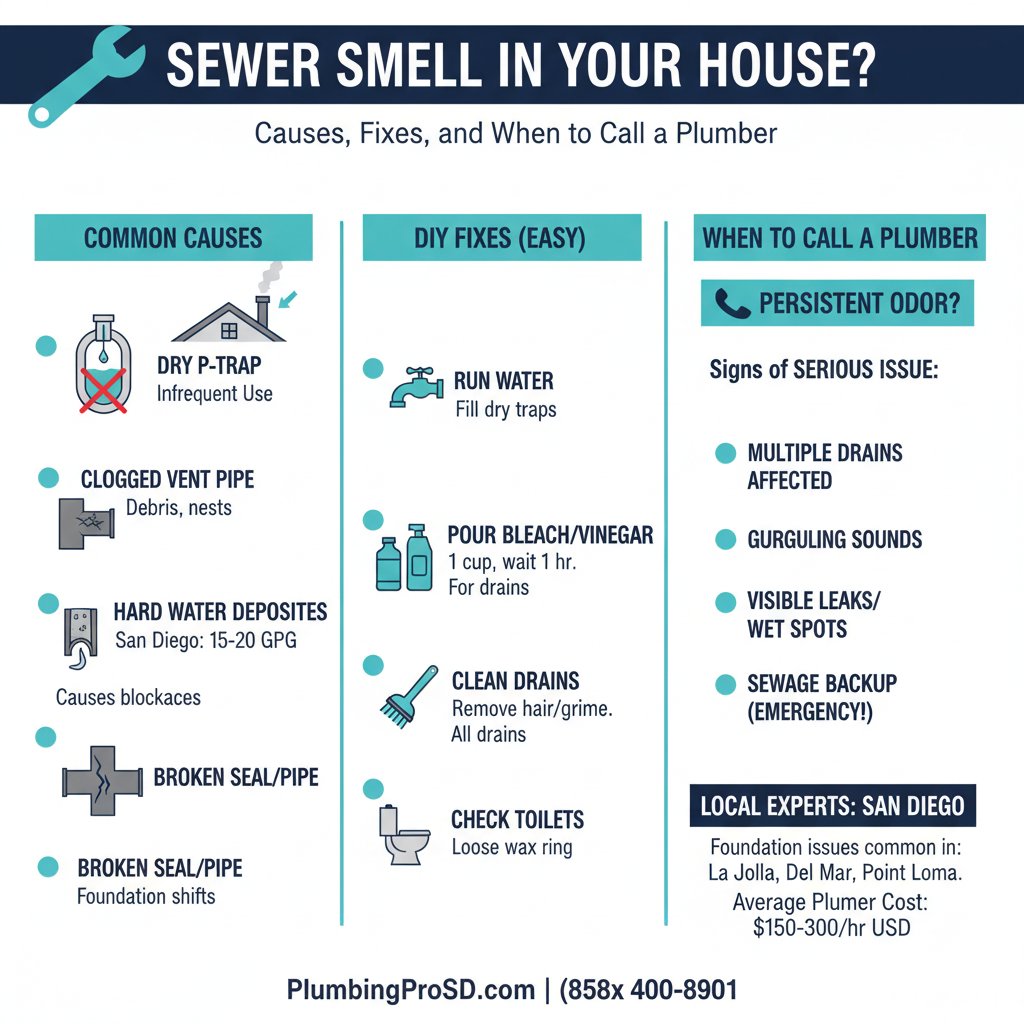
The short answer
- A sewer smell is usually sewer gas escaping your plumbing, most often from a dry P-trap in an unused drain. Run water down the drain for a minute to refill the seal.
- Other common causes are clogged drains, a damaged or blocked roof vent, a failed toilet wax ring, or a problem in the main sewer line.
- Sewer gas (hydrogen sulfide) smells like rotten eggs and can cause headaches, nausea, and dizziness at higher concentrations, so address it promptly.
- Smell in multiple rooms plus slow drains, gurgling, or backups points to a main line problem that needs a camera inspection.
- If you suspect a strong gas leak, ventilate and call a licensed plumber. Plumbing Pro San Diego takes calls any time at (858) 400-4417.
The unmistakable, foul odor of sewer gas permeating your San Diego home is more than just unpleasant; it’s a clear signal that something isn’t right with your plumbing or sewer system. This pervasive smell, often described as rotten eggs or stagnant waste, isn’t just a nuisance – it can indicate potential health hazards and underlying issues that need prompt attention.
As homeowners in San Diego County, we face unique challenges that can contribute to these unwelcome odors, from our specific climate and water quality to the age of our infrastructure in various neighborhoods. Understanding the common culprits behind a sewer smell can empower you to tackle simple fixes yourself or recognize when it’s time to call in the professionals.
At Plumbing Pro San Diego, we frequently connect residents across the county with plumbers who diagnose and eliminate these pungent problems, restoring comfort and safety to their homes. This guide will walk you through what causes that noxious sewer smell, practical steps you can take to resolve it, and precisely when to enlist the expertise of a licensed San Diego plumber.
What Exactly is That Sewer Smell, and Is It Dangerous?
That foul odor you’re experiencing is often sewer gas, a complex mix of gases produced by the decomposition of organic waste in your pipes and sewer system. The primary components include methane, ammonia, nitrogen, carbon dioxide, and hydrogen sulfide. It’s the hydrogen sulfide that typically gives sewer gas its characteristic rotten egg smell.
While generally not immediately toxic at the low concentrations usually found in a home, prolonged exposure or higher concentrations can be harmful. Methane is highly flammable, and hydrogen sulfide, even at low levels, can cause symptoms like headaches, nausea, or dizziness. In very high concentrations, it can be extremely dangerous, even deadly.
The smell itself serves as a crucial warning sign, indicating that these gases are escaping your plumbing system and entering your living space, where they absolutely should not be. Your home’s plumbing system is designed to contain these gases within the pipes and vent them safely outside through a roof vent. When that system fails, the smell becomes evident.
Common Causes of Sewer Smell in Your San Diego Home (and What You Can Do)
Pinpointing the exact source of a sewer smell can sometimes be tricky, but many causes are relatively common and, in some cases, can be addressed with simple DIY solutions. Here are the most frequent culprits we encounter in San Diego homes:
Dry P-Traps
Every drain in your home – sinks, showers, tubs, floor drains – has a P-trap, the U-shaped pipe section designed to hold a small amount of water. This water creates a water seal that blocks sewer gases from rising out of the drain and into your home.
- The Problem: If a drain goes unused for an extended period, the water in the P-trap can evaporate, breaking the seal. This is especially common in guest bathrooms, utility sinks, or laundry room floor drains that aren’t regularly used. In San Diego’s relatively dry climate, this evaporation can happen more quickly than in humid regions, especially if your home isn’t consistently cooled.
- The Fix: Simply run water down the affected drain for a minute or two. This will refill the P-trap and re-establish the water seal. For drains that are rarely used, pour a tablespoon of mineral oil into the drain after running water. The oil floats on top of the water and slows down evaporation.
Clogged Drains
A drain that isn’t completely blocked but is slowly accumulating hair, soap scum, grease, food particles, or other debris can become a breeding ground for bacteria. As this organic matter decays, it produces foul-smelling gases that can waft up the drain.
- The Problem: In San Diego, our hard water (15–20 GPG, primarily sourced from the Colorado River via the San Diego County Water Authority (SDCWA)) contains higher mineral content. These minerals can combine with soap scum and grease, creating tenacious clogs that trap decaying organic material more effectively.
- The Fix:
- Plunger Power: A good old-fashioned plunger can often dislodge minor clogs.
- Baking Soda & Vinegar: Pour 1 cup of baking soda down the drain, followed by 1 cup of white vinegar. Let it sit for 30 minutes to an hour (or even overnight), then flush with hot water. The fizzing action can help break down buildup.
- Manual Removal: For visible hair clogs, you can try using a pair of needle-nose pliers or a drain snake/zip-it tool.
- Avoid Harsh Chemical Drain Cleaners: These can damage your pipes, especially older ones common in neighborhoods like North Park or Hillcrest, and often only provide a temporary solution.
- When to Call a Plumber: If DIY methods don’t work, a deeper clog likely requires professional attention. Plumbing Pro San Diego connects you with expert drain cleaning services that can effectively remove stubborn blockages. You can also learn more about preventing clogs here.
Vent Pipe Issues
Your home’s plumbing system includes a vent stack that extends through your roof. This system has two main functions: it allows fresh air into the drainpipes to help water flow smoothly, and it allows sewer gases to escape safely outside your home, rather than into it.
- The Problem: If a vent pipe becomes clogged (by bird nests, leaves, debris, or even small animals) or damaged (cracked, loose connections), it can disrupt the airflow and pressure. This can cause sewer gases to be pushed back into your home through drains or create a siphon effect that pulls water from P-traps. In San Diego, our mild climate means critters are active year-round, and debris from nearby trees (like our common eucalyptus or ficus) can easily fall into vent pipes.
- The Fix:
- Visual Inspection (if safe): If you’re comfortable and have proper safety equipment, you can carefully inspect the top of the vent pipe on your roof for obvious obstructions.
- Professional Help: Vent pipe issues are often best left to professionals, as they involve working on the roof and require specific tools for clearing deep clogs or repairing damaged pipes.
- When to Call a Plumber: If you suspect a vent pipe issue, or if the smell is widespread and not localized to one drain, contact a licensed plumber. They can perform a thorough inspection and clear any blockages safely.
Loose or Damaged Toilet Wax Ring
A wax ring forms a watertight and airtight seal between the base of your toilet and the drainpipe in the floor. This seal is essential for preventing water leaks and, more importantly, blocking sewer gases.
- The Problem: Over time, the wax ring can dry out, crack, shift, or become damaged, especially if the toilet becomes loose or wobbly. When this seal fails, sewer gas will escape from around the base of the toilet.
- The Fix:
- Check Tightness: First, gently try to rock your toilet. If it wobbles, try tightening the bolts at the base. Sometimes a loose toilet is enough to compromise the seal.
- Professional Replacement: If the smell persists or the toilet remains wobbly after tightening, the wax ring likely needs to be replaced. This is a task that often requires temporarily removing the toilet, which can be heavy and prone to cracking. It’s usually best handled by a professional plumber.
- When to Call a Plumber: For any persistent sewer smell around your toilet, especially if accompanied by a wobble or signs of a slow leak, call Plumbing Pro San Diego for bathroom plumbing services.
Leaking Drain Pipes or Connections
While P-traps and vent pipes are common culprits, actual leaks in your drain lines or their connections can also allow sewer gas to escape.
- The Problem: Small cracks in pipes, loose fittings under sinks, or compromised seals within wall cavities can all create pathways for gas to enter your home. This is particularly relevant in older San Diego homes, such as those found in Ocean Beach, Kensington, or Logan Heights, where aging galvanized or cast-iron pipes may have corroded or developed weak points over decades of use.
- The Fix:
- Visual Inspection: Check under all sinks for visible leaks, dampness, or loose pipe connections. Ensure all drain connections are snug.
- Professional Repair: If you find a leak, especially within a wall or floor, it’s a job for a professional plumber who can accurately diagnose the source and perform the necessary pipe repair.
Other, Less Common Causes
- Sump Pump Pit Odors: If you have a sump pump, especially an older one, odors can arise from stagnant water in the pit or a faulty lid seal. Regular cleaning and ensuring a tight seal can help.
- Old or Damaged Cleanout Plugs: Your sewer system has cleanout access points, usually with threaded caps. If these caps are loose, missing, or damaged, sewer gas can escape.
- Worn Appliance Drain Hoses: The drain hose for your washing machine or dishwasher should have an air gap or a proper P-trap. If the hose is directly connected to the drain without one, or if it’s old and cracking, it could allow gases in.
When to Call Plumbing Pro San Diego: Signs You Need a Professional Plumber
While some sewer smell issues can be resolved with DIY efforts, many underlying causes demand the expertise, specialized tools, and experience of a licensed plumbing professional. Ignoring persistent sewer smells can lead to more significant problems down the line, including potential health risks and costly damage.
Here are the clear indicators that it’s time to contact Plumbing Pro San Diego:
1. Persistent Odor Despite DIY Efforts
If you’ve tried the common fixes like running water in drains, cleaning clogs, and checking for obvious leaks, but the sewer smell lingers or returns quickly, it’s a sign of a deeper, more complex issue beyond simple fixes.
2. Multiple Drains Affected or Slow Draining
A sewer smell emanating from multiple fixtures, especially when accompanied by slow drains or gurgling sounds from toilets or sinks, strongly suggests a problem with your main sewer line. Reviewing the signs your sewer line is failing can help you confirm whether the smell is a surface problem or something structural. This is a common issue for homeowners throughout San Diego County.
- San Diego Specifics: Our beautiful, drought-tolerant landscaping, while water-wise, often features aggressive root systems from plants like ficus, eucalyptus, and pepper trees. These roots are notorious for infiltrating and crushing older sewer lines, which are prevalent in established neighborhoods like Normal Heights, Hillcrest, and Kensington. Tree root intrusion is one of the leading causes of main sewer line blockages and damage in our area.
- Further Reading: If you suspect a main sewer line issue, you can learn more about professional intervention on our dedicated sewer line services page.
3. Gurgling Sounds, Backups, or Recurring Clogs
These are classic symptoms of a main sewer line blockage or collapse. When the primary drain for your home is obstructed, wastewater can’t flow properly, leading to backups, loud gurgling noises as air and water struggle to pass, and recurring clogs in various fixtures. In the worst cases you’ll see sewage backing up into your tub or shower, which is often an emergency situation.
- Further Reading: If you’re experiencing backups or recurring clogs, it might be time for an emergency plumber in San Diego.
4. Visible Leaks, Water Damage, or Damp Spots
If you notice damp spots on walls, ceilings, or floors, or see visible leaks along with a sewer smell, it points to a pipe leak within a hidden space.
- San Diego Specifics: Many homes built in San Diego during the 1950s–70s feature slab-on-grade foundations. Leaks that occur within the concrete slab, known as slab leaks, are particularly difficult to detect and repair without specialized equipment. A sewer smell accompanied by unusual warm spots on the floor or unexplained increases in your water bill could indicate a slab leak allowing sewer gas (if it’s a drain line) or simply creating dampness for mold growth, which often has a musty, sewage-like odor.
- Further Reading: If you suspect a hidden leak, our leak detection services are designed to find and fix these issues with minimal disruption.
5. Suspected Sewer Line Damage (Cracks, Collapses, Bellies)
Beyond simple clogs, sewer lines can suffer structural damage due to ground shifting, corrosion, or the aforementioned tree roots. Cracks or breaks in the pipe allow sewer gas to escape into the soil around your home, where it can eventually migrate into your house, or even cause sewage to leak into your yard.
- San Diego Specifics: Unlike colder climates that experience freeze/thaw cycles, San Diego’s stable ground conditions make trenchless sewer repair an especially well-suited and highly effective solution for many homeowners. This method minimizes disruption to your landscaping and property.
- Further Reading: To understand how the plumbers we connect you with diagnose and fix these issues, read about our sewer camera inspection services and the benefits of trenchless sewer repair in San Diego.
6. Unidentified Source of Odor
Sometimes, the sewer smell is present, but its origin remains a mystery after your own checks. In these cases, the expertise and diagnostic tools of a professional plumber are essential to locate the elusive source.
What Happens When You Call About a Sewer Smell
When you call Plumbing Pro San Diego for a sewer smell, the plumber’s approach is methodical and thorough. We understand the urgency and discomfort these issues cause, and the goal is always an accurate diagnosis and a lasting solution.
-
Thorough Inspection & Diagnosis: The licensed technicians we connect you with will conduct a detailed inspection of your plumbing system. This often includes:
- Visual Check: Examining all visible pipes, drains, and fixtures for leaks or obvious problems.
- Sewer Camera Inspection: For suspected main sewer line issues, the plumbers we connect you with use advanced sewer camera technology. A high-resolution camera is snaked into your sewer line, letting them see its exact condition in real-time. This pinpoints the precise location and nature of problems like tree root intrusion, cracks, corrosion, bellies (sags), or blockages, without invasive digging.
- Smoke Testing: For hard-to-find leaks in drain and vent systems, especially elusive vent pipe issues, the plumbers we connect you with can perform a smoke test. Non-toxic smoke is introduced into the system, and where it exits, a leak is identified.
-
Targeted Solutions Based on Diagnosis:
- Drain Cleaning: For stubborn clogs, the plumbers we connect you with may use powerful augers or high-pressure hydro-jetting equipment to thoroughly clear the pipes, removing even the most tenacious buildup caused by San Diego’s hard water and typical household waste.
- P-Trap & Wax Ring Replacement: The plumbers we connect you with efficiently replace faulty P-traps or damaged toilet wax rings, ensuring a perfect seal.
- Vent Pipe Repair/Replacement: The plumbers we connect you with can safely access and repair or replace damaged vent pipes, ensuring proper ventilation and gas expulsion.
- Pipe Repair or Replacement: For leaking or damaged drain pipes, the plumbers we connect you with perform precise repairs or replacements.
- Sewer Line Repair & Replacement: Depending on the severity and location of sewer line damage, the plumbers we connect you with offer both traditional trenching methods and modern trenchless sewer repair options like pipe bursting or pipe lining. Trenchless methods are often preferred in San Diego as they minimize excavation, preserving your landscaping and property.
The plumbers in the network have the experience and equipment to handle everything from a simple P-trap fix to a complete sewer line overhaul, and are familiar with local San Diego Development Services Dept (DSD) permitting requirements for major repairs.
Preventing Sewer Smells in Your San Diego Home
Prevention is always better than cure, especially when it comes to unpleasant plumbing issues. Here are some proactive steps you can take to keep sewer smells at bay:
- Regularly Run Water in Unused Drains: Make it a habit to run water for a minute or two in all sinks, showers, and floor drains at least once a month. This keeps P-traps full and seals intact.
- Be Mindful of What Goes Down the Drain: Avoid pouring fats, oils, and grease (FOG) down your kitchen sink, as they solidify and contribute to stubborn clogs. Use drain strainers to catch hair and food particles. You can learn more about garbage disposal maintenance to prevent buildup.
- Use Enzymatic Drain Cleaners Periodically: Unlike harsh chemicals, enzymatic cleaners use natural bacteria to break down organic matter in your drains, helping to prevent buildup without damaging pipes.
- Address Leaks Promptly: Even small drips can indicate a problem that could worsen. Fix or report leaks as soon as you notice them.
- Consider Regular Plumbing Inspections: For older homes in areas like Ocean Beach or Logan Heights, an annual plumbing inspection can identify potential issues like corroding pipes, slow-developing clogs, or minor vent pipe problems before they escalate into major sewer smell emergencies.
- Manage Tree Roots: If you have large trees, especially ficus or eucalyptus, near your sewer line, consider having your sewer line regularly inspected with a camera to monitor for root intrusion. You can also explore root-inhibiting treatments.
- Conserve Water Wisely: While water conservation is key in San Diego (check the San Diego Water Authority for tips), ensure you’re still flushing toilets adequately and running enough water to keep those P-traps full.
Important Safety Considerations
While most sewer smells are primarily a nuisance, it’s important to be aware of potential safety concerns.
- Hydrogen Sulfide Toxicity: At high concentrations, hydrogen sulfide, the gas responsible for the rotten egg smell, can be dangerous, causing respiratory issues and even loss of consciousness. If the smell is overwhelming or you experience symptoms like dizziness or nausea, ventilate your home and consider evacuating until the source is identified and resolved.
- Natural Gas Leaks vs. Sewer Gas: Both natural gas (supplied by SDG&E in our area) and sewer gas can have a rotten egg or sulfur-like odor. If the smell is strong, persistent, and you also hear a hissing sound, or if you feel unwell, it could be a natural gas leak.
- If you suspect a natural gas leak, evacuate your home immediately, move to a safe distance, and call SDG&E at their emergency number (usually found on their website) or 911. Do NOT use electrical switches, cell phones, or anything that could create a spark while inside or near the suspected leak area. Visit the SDG&E safety page for more information.
- Mold Growth: Persistent dampness from a hidden leak that also allows sewer gas to escape can encourage mold growth. Mold can cause respiratory problems and has a distinct musty, often sewage-like odor. Addressing leaks promptly prevents both sewer gas entry and mold proliferation.
Data Table: Common Sewer Line Issues & Professional Solutions
This table highlights some common sewer line issues that cause persistent sewer smells and the professional solutions available through Plumbing Pro San Diego’s network:
| Issue | Common Symptoms | DIY Attempts (Limited Effectiveness) | Professional Solutions Available |
|---|---|---|---|
| Main Line Clog | Multiple slow drains, gurgling, backups, persistent sewer smell, especially from lowest drains | Chemical drain cleaners (not recommended), heavy-duty plunger (may temporarily clear) | Sewer camera inspection, Hydro-jetting, Drain augering |
| Tree Root Intrusion | Recurring clogs, slow drains, gurgling, sewer smell, especially in older homes (e.g., North Park, Hillcrest) | N/A (roots are too strong) | Sewer camera inspection, Hydro-jetting, Trenchless pipe lining, Pipe bursting |
| Cracked/Broken Sewer Pipe | Consistent strong sewer smell, wet spots in yard, indentations on lawn, unexplained high water bill (if water main leak) | N/A | Sewer camera inspection, Excavation & pipe replacement, Trenchless pipe lining |
| ”Belly” in Sewer Line | Persistent slow drains, recurring clogs in one section, sewer smell (due to standing waste) | N/A | Sewer camera inspection, Excavation & pipe replacement |
| Vent Pipe Blockage/Damage | Widespread sewer smell, gurgling, drains sometimes ‘suck’ water out of P-traps | Roof inspection (if safe), minor debris removal (rarely effective for deep clogs) | Vent stack cleaning, Smoke testing, Vent pipe repair/replacement |
Before you hire any plumber, confirm their California contractor license is active on the CSLB website. Gas and sewer work should only go to a licensed C-36 contractor.
Frequently Asked Questions
Q: What does sewer gas smell like?
A: Sewer gas typically smells like rotten eggs, sulfur, or human waste. This distinctive odor comes primarily from hydrogen sulfide, a gas produced by the decomposition of organic matter in your sewer system.
Q: Is sewer gas dangerous to breathe?
A: At low concentrations, sewer gas is mostly an unpleasant nuisance. However, prolonged exposure or high concentrations can be dangerous, leading to symptoms like headaches, nausea, dizziness, or fatigue. In very high concentrations, hydrogen sulfide can be toxic and even fatal. It’s always best to address a sewer smell promptly.
Q: Can a sewer smell be related to a main sewer line problem?
A: Absolutely. If you experience a sewer smell in multiple areas of your home, have slow drains, gurgling noises, or recurring backups, it’s a strong indicator of a blockage or damage in your main sewer line. This often requires professional diagnosis, such as a sewer camera inspection.
Q: How often should I run water in unused drains?
A: To prevent P-traps from drying out and allowing sewer gas to enter your home, we recommend running water in all infrequently used drains (e.g., guest bathrooms, utility sinks) for about a minute at least once every 2-4 weeks. Adding a tablespoon of mineral oil afterwards can further slow evaporation.
Q: Do I need a permit for sewer line repair in San Diego?
A: Yes, major plumbing work, especially sewer line repairs or replacements, typically requires permits from the San Diego Development Services Dept (DSD) to ensure the work meets local building codes and safety standards. Any licensed plumber we connect you with will handle all necessary permitting for sewer line projects.
Don’t Live with That Foul Odor Any Longer!
A persistent sewer smell in your San Diego home is more than just an annoyance – it’s a warning sign from your plumbing system that shouldn’t be ignored. Whether it’s a simple fix or a more serious underlying issue with your sewer line, prompt attention can prevent further discomfort, potential health risks, and costly damage.
At Plumbing Pro San Diego, we connect you with local, licensed experts for diagnosing and resolving all types of plumbing issues, from the smallest drain clog to complex sewer line repairs. Every technician in our network holds a C-36 license and is equipped with the latest tools and knowledge to quickly identify the source of the problem and implement a lasting solution, proudly serving all of San Diego County.
Don’t let that unwelcome odor linger. Contact Plumbing Pro San Diego today for reliable, professional plumbing services. Call us at (858) 400-4417 or visit our Sewer Line Services page to schedule an inspection.
Areas this guide covers
We connect homeowners with licensed plumbers in these San Diego County communities.
Keep reading
Need a Plumber in San Diego?
Licensed, insured plumbers, ready across San Diego County. The plumber quotes you before any work starts.
Call (858) 400-4417Call any time, day or night, anywhere in San Diego County